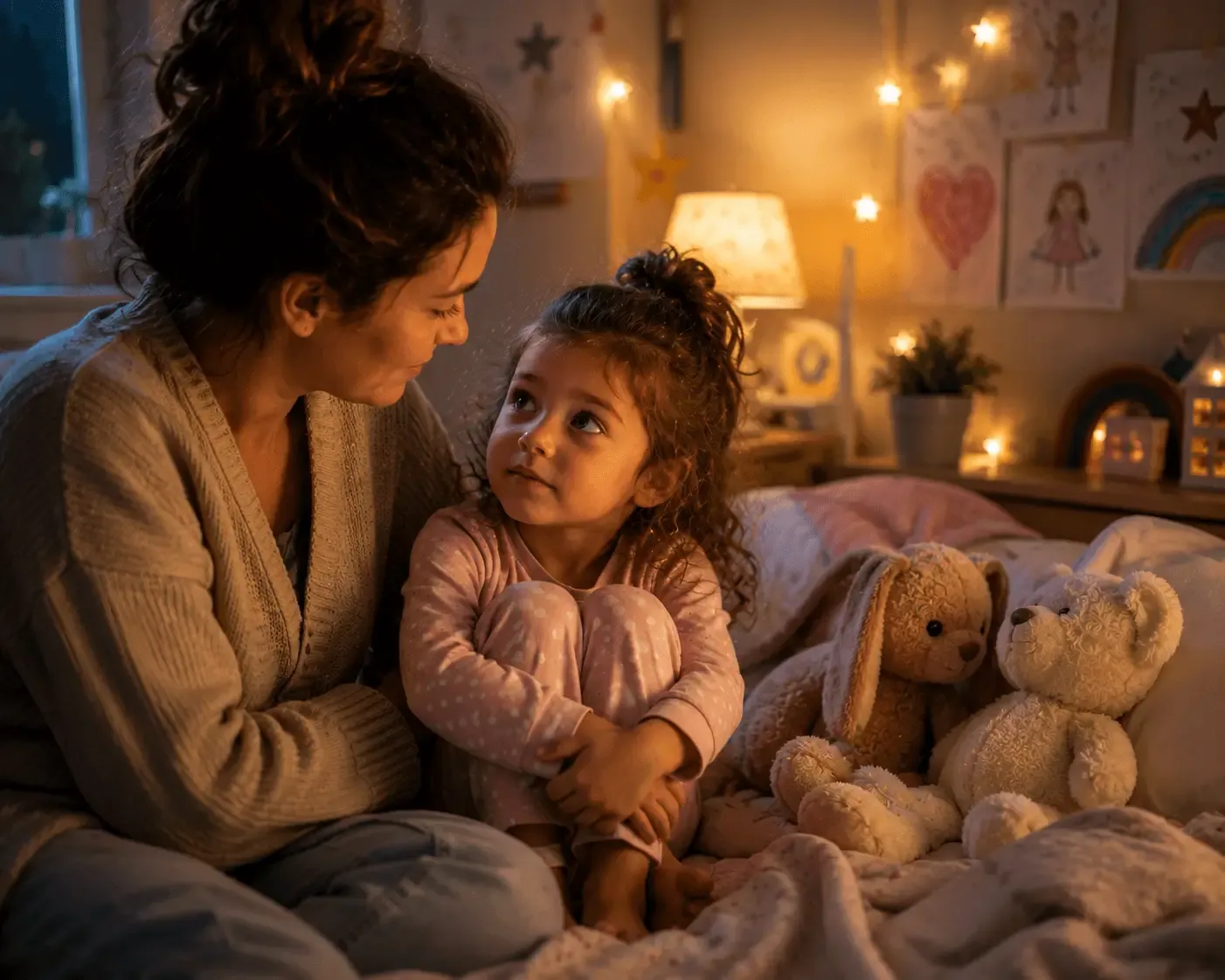
Why kids so often feel more deeply than grown-ups give them credit for
Adults often don't give children enough credit.
Because they're tiny.
They play — that's the reason.
Because they haven't quite grasped it all yet.
Yet children often pick up on far more than we realize.
Children sometimes amaze adults with just how much they understand.
Kids sense tension in the air right away
Children don't always need things explained to them.
They often already have a sense of it:
- tension,
- sorrow
- stress
- or joy.
Even when nobody says a word.
That's because kids pick up on things so easily, like:
- I'm glad to help with a Dutch-to-English translation, but keep in mind that "toon" on its own can mean several different things depending on how it's used: - **tone** (as in tone of voice) - **show** or **demonstrate** (as in "toon aan") - **tune** or **melody** (in a musical sense) Could you share more context, or the full sentence you'd like translated?
- facial expressions,
- body language
- and routines.
Why Stories Make Emotions Easier to Handle
Young children often struggle to put their feelings into words.
Stories just make it easier to get there.
When a character:
- scared
- sad
- feels uncertain
- overcomes a difficult challenge,
Kids often pick up on that feeling right away.
Stories put words to feelings children can't yet name on their own.
Fantasy gives hard truths a safer place to land
That's part of what makes fantasy stories so compelling.
A talking bear afraid of the dark feels less threatening than talking about fear head-on.
A lonely dragon shows children what it really feels like to be alone.
Stories give us a bit of breathing room…
but it also brought a sense of recognition.
Why kids love picturing themselves as the hero of the story
Kids aren't just drawn to stories that keep them on the edge of their seats.
They take pride in feeling strong.
When a child views themselves as:
- brave
- smart,
- helpful,
- creative, or imaginative
Self-confidence tends to grow right along with it.
That's precisely what makes personalized stories so special.
The child isn't seeing a hero at all.
The child is the hero.
The Power of Small Victories
Beneath the surface, countless children's adventure stories are built around one single thread:
to solve a problem.
That might be a big one…
or something along those lines, barely worth mentioning.
For a child, though, those wins feel like the biggest thing in the world.
A story shows:
- that exciting things keep slipping away,
- that mistakes are allowed,
- and that courage doesn't mean never feeling afraid at all.
Why bedtime so often turns into an emotional flashpoint
Many parents notice this pattern.
As sleep closes in, feelings have a way of rising to the surface.
Children end up becoming:
- more sensitive
- more affectionate
- chatterbox.
That's simply because things quiet down as the day goes on.
That's exactly what makes bedtime stories so valuable.
These give children a boost in developing:
- relaxed
- process,
- and clicks safely shut.
Why Some Books Stick With Us Long After We've Finished Them
This story has stuck with me for years.
Not because the story was flawless.
Rather, it's the feeling that surrounds it.
Children remember:
- who read aloud,
- how it felt
- where they lay
- and how often they found themselves laughing.
That's what turns stories into emotional memories.
Maybe kids actually listen better than we give them credit for.
Adults often talk down to children.
Mostly, though, children just watch.
They feel.
Observe.
Remember.
It's perhaps precisely for that reason that stories carry such weight.
Because a story is more than the words it's told in.
They're really just feelings wearing a disguise.