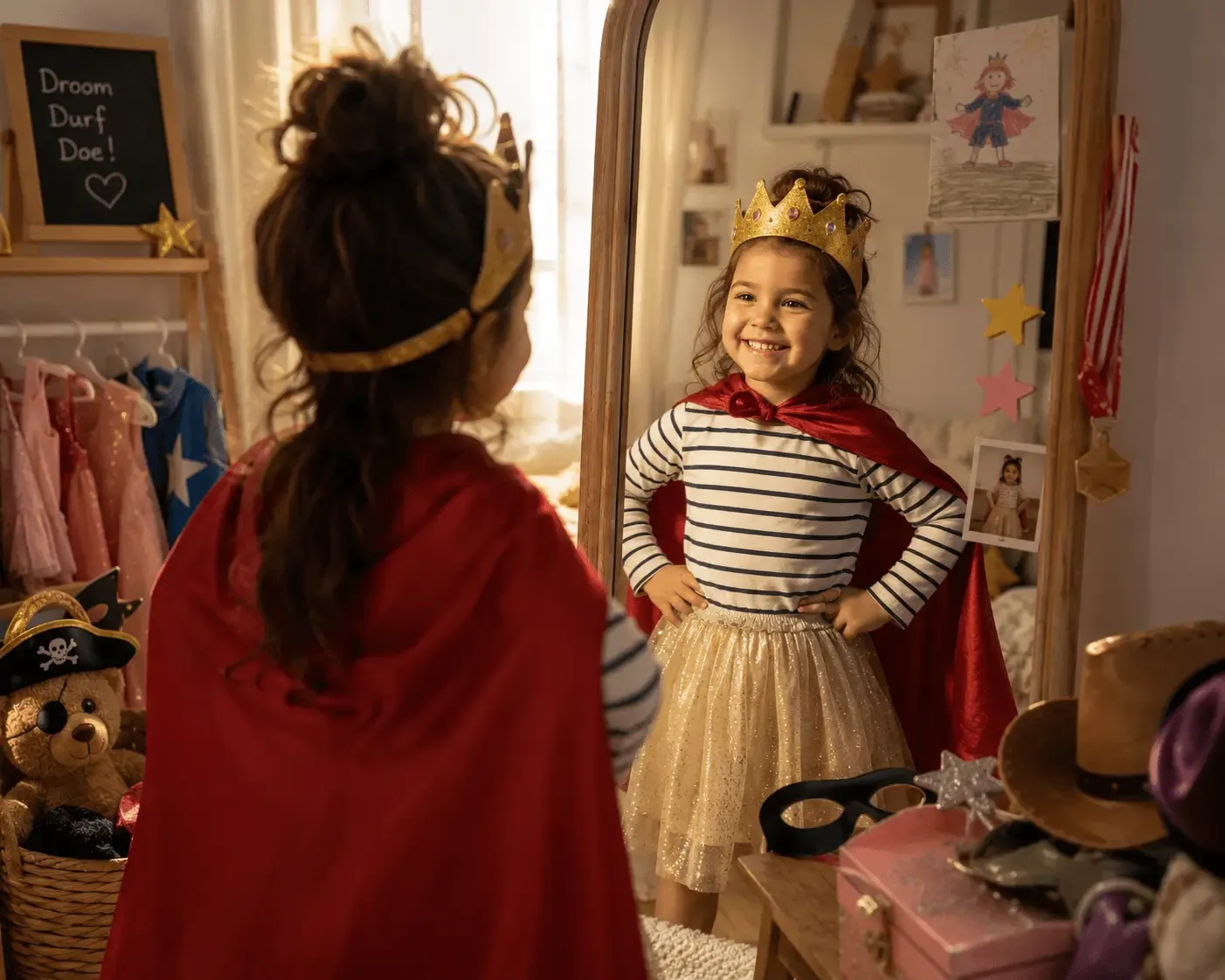
Why kids love seeing themselves in costume
A cape.
A crown.
A pirate hat.
An old pair of sunglasses pulled from a dress-up box, maybe.
A child needs nothing more than that to slip into someone else's skin entirely.
Pretend play is really just storytelling in disguise
As kids slip into costumes, a story starts writing itself.
They suddenly become:
- king,
- veterinarian
- superhero,
- astronaut,
- dragon tamer
That game might look simple on the surface, but there's a lot more happening beneath it.
Kids build understanding of different roles by acting them out in imaginative play
Through pretend and role-play, children build skills such as:
- social settings
- emotions,
- collaboration
- and creativity.
They get a taste of what it's like to walk in someone else's shoes.
Why Costumes Make the Magic Happen
A cape changes nothing…
but nonetheless, everything changes.
For children, a costume is what turns make-believe into something they can actually see.
That's what gets them so worked up about:
- princess dresses
- superhero costumes
- knights' helmets.
Why stories and costumes make such a perfect pair
Plenty of children's books operate on this very principle.
They give children a role to slip into.
A personalized story pulls that off with even more impact:
the child is the story's true hero.
Fantasy fuels a stronger sense of self-confidence
When a child views themselves as:
- strong,
- clever
- funny,
- dapper, or sharp-dressed
Can that really shake someone's self-confidence?
Through stories and imaginative play, children get room to discover traits they might still find thrilling once they show up in everyday life.
Come to think of it, even grown-ups might still dress up now and then.
Adults simply have another name for it:
- fashion
- style
- a polished, professional look
Maybe, every now and then, we all just want to be somebody else for a little while.