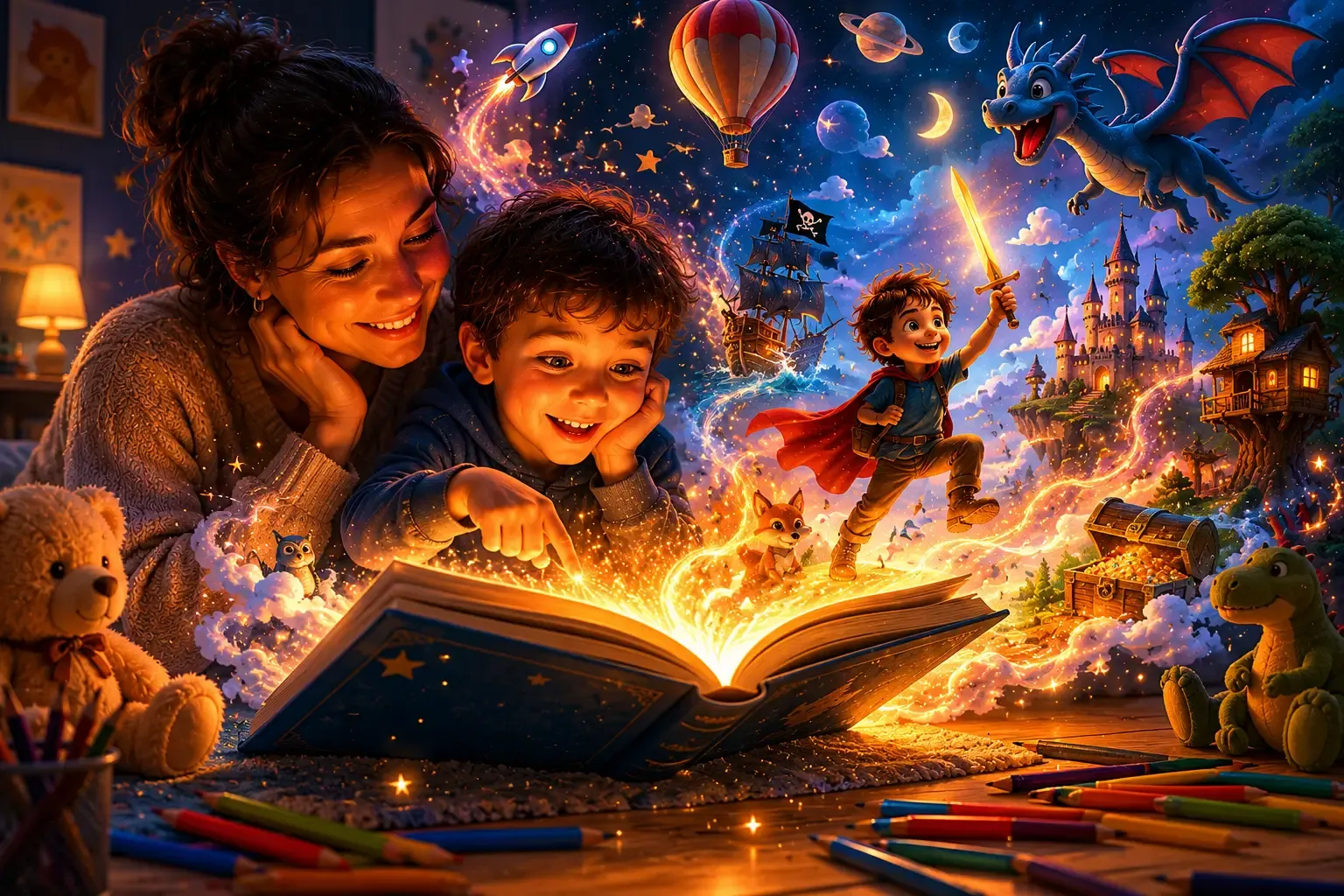
The psychology behind personalized children's books: why kids light up when they see themselves in a story
There's something almost magical about watching a child's face light up the moment they spot themselves in a story. Why does hearing their own name mid-sentence snap their attention into focus? And why, after the hundredth read-through, do they still beg for that same personalized tale one more time?
The reason comes down to psychology.
Platforms like BooklyDoo tap into something deeply human: the desire for recognition. Kids connect more with stories where they can see themselves. That's what makes personalized children's books more than just a fun idea—there's real psychological weight behind them.
Young children are naturally self-centered
In developmental psychology circles, this isn't a put-down—it just describes how young children naturally see everything through their own eyes.
Young children's lives tend to center on things like:
- "I",
- "mine,"
- and "what's going to happen to me?"
That's precisely why personalization is so effective. When kids see themselves in a story, it naturally feels more meaningful and relevant to them.
Being recognized is what earns attention.
Our brains light up more when something feels personal.
Consider, for instance:
- hearing your name called out somewhere in a noisy room,
- recognize your face from a photo
- or come across something that feels like it was written specifically about you.
Children respond to this even more strongly. That's why a personalized story grabs their attention faster than any off-the-shelf book could.
Self-confidence and a sense of identity
Children build their sense of identity through the stories they hear and the experiences they live. When a child sees themselves reflected as:
- hero,
- explorer,
- smart problem-solver
- or bold adventurer,
can help build self-confidence.
Stories give children a way to think through:
- who they are,
- what they can
- and how they handle challenges that come their way.
How stories help children grasp emotions more deeply
Picture books give kids a safe space to work through their feelings.
In a story made just for them, the child gets to feel:
- exciting moments
- friendships
- challenges
- or fears.
That helps children make sense of their emotions and put them into words.
Kids, especially the younger ones, usually pick up on emotions much more naturally through stories than they do from being told directly.
Personalized stories, though, come across as
Normal stories are make-believe. But when a child:
- sees his own name
- recognizes his own reflection,
- recognizes familiar elements,
the boundary between imagination and reality starts to blur.
That draws you much deeper into the experience.
Why Repetition Reassures Children
Parents often find themselves puzzled by their kids' insistence on hearing the exact same story night after night.
Repetition offers several psychological benefits:
- predictability
- control
- and safety.
This effect tends to be even more powerful with personalized stories, since the whole thing feels so close to home.
The Power of Imagination
Children need fantasy to grow.
Through imagination, children learn:
- solving problems
- creative thinking,
- develop empathy,
- and run through different scenarios.
With BooklyDoo, personalization is what gives fantasy its real punch. The child isn't just watching the story unfold from the sidelines — they're woven right into it.
Why Parents Get So Emotional About Personalized Books
Children aren't the only ones who find personalized books special — parents, too, often get emotional seeing their child cast as the main character.
That's because:
- it feels personal
- creates lasting memories,
- and freezes a particular era in time.
Years down the road, plenty of parents still hang onto these books simply because of the memories attached to them.
Technology has put personalization within everyone's reach
Up until recently, personalized books tended to be pricey and hard to come by. Now, with AI driving things forward, platforms such as BooklyDoo can:
- generate one-of-a-kind illustrations,
- adjust stories,
- and churn out books quickly.
This puts personalized reading within reach for far more families.
Conclusion
Personalized children's books haven't caught on by chance — they tap directly into how kids think, learn, and work through their feelings.
By blending recognition, imagination, and personal connection, platforms like BooklyDoo craft stories that kids don't just read—they live them.