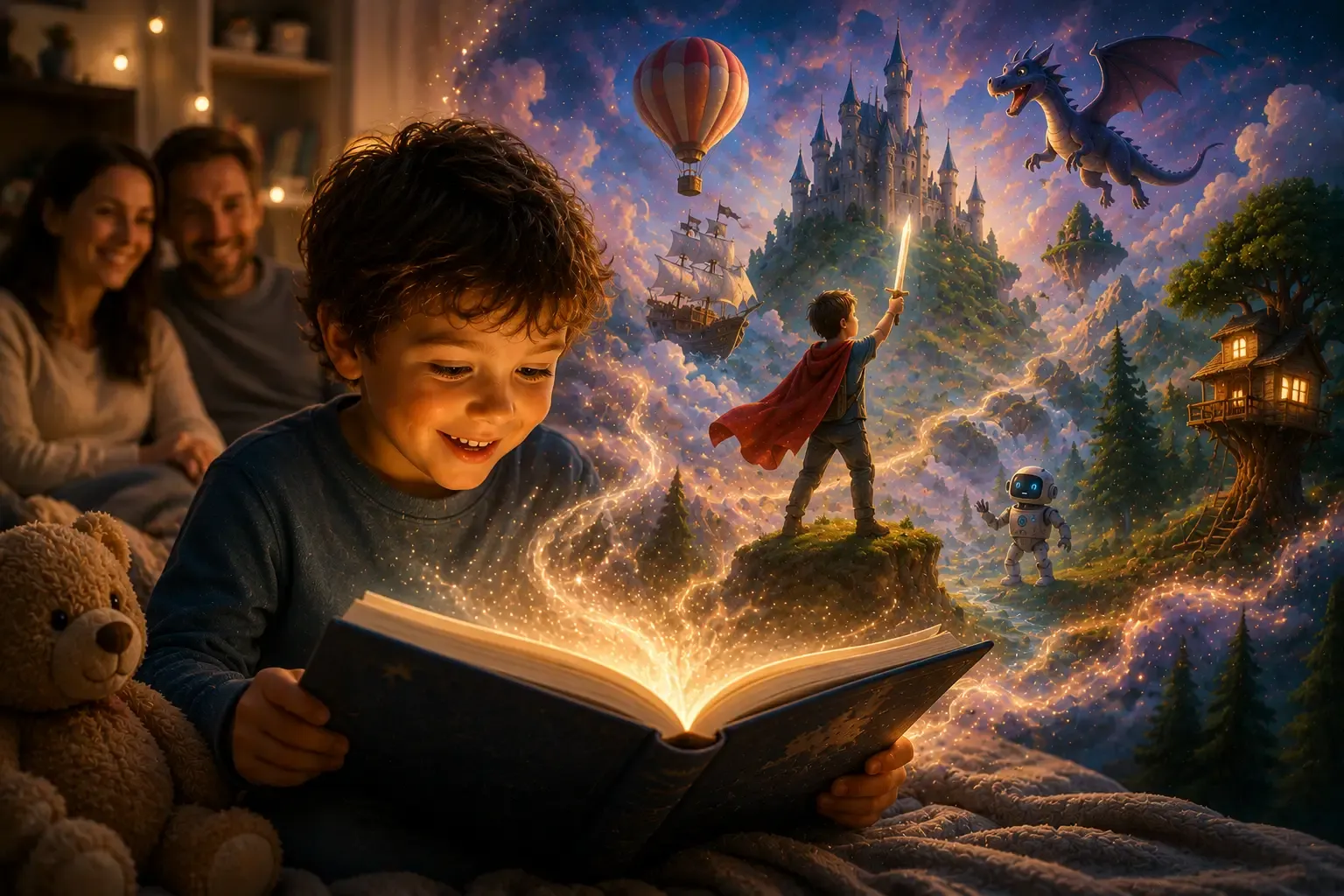
The Future of Children's Books: How AI and Personalization Are Reshaping the Way Kids Read
Children's books go back centuries, yet how kids actually experience stories today is evolving faster than ever.
Stories that once spoke to a mass audience are now expected to speak to the individual. Consumers increasingly want content shaped around them personally—and platforms like BooklyDoo show just how much AI is speeding up that shift.
From Standard Tales to One-of-a-Kind Adventures
Standard children's books are written with a general audience in mind. Personalized books flip that around, built entirely for one particular kid.
That changes the whole way the piece reads.
AI makes personalization possible at scale
Thanks to AI, stories are now able to:
- automatically adjusted
- unique illustrations,
- and matched to age and interests.
That used to cost a fortune in time and money.
Children want interaction
New generations are being raised alongside interactive technology, and as a result, they expect:
- involvement,
- personalization,
- and recognition.
A book that puts them front and center as the hero speaks directly to that mindset.
Printed books still matter
Even in the digital age, print still holds its own when it comes to children's books.
Why's that?
Because what parents care about is:
- tangibility
- quality time together,
- and moments spent away from screens.
BooklyDoo brings together cutting-edge AI and the look and feel of a real, physical book.
The Rise of Emotional Products
Consumers are placing more and more weight on the emotional pull of a product.
A personalized children's book:
- tells a story,
- captures memories
- and feels one-of-a-kind.
That's what elevates it beyond an ordinary product.
What lies ahead?
In the years ahead, personalized stories are poised to grow even more sophisticated:
- dynamic storylines,
- interactive choices
- voting
- and even more lifelike illustrations.
AI will increasingly be able to shape stories around each child's own tastes and needs.
The challenge: keeping quality from slipping
Technology on its own won't cut it. Parents want to see:
- beautiful illustrations,
- strong stories,
- and emotional value.
Platforms that succeed, then, will be the ones willing to invest in technology and creativity alike.
Why this is more than just a passing trend
Personalized children's books speak to needs that are deeply human:
- recognition,
- connection,
- fantasy,
- and attention.
This is why the shift feels less like a passing trend and more like a genuine glimpse of where storytelling is headed.
Conclusion
Children's books are shifting from one-size-fits-all tales to something far more personal. With AI now in the mix, platforms like BooklyDoo can craft one-of-a-kind adventures where kids actually see themselves in the story.
That personal connection is exactly what makes reading feel magical again.