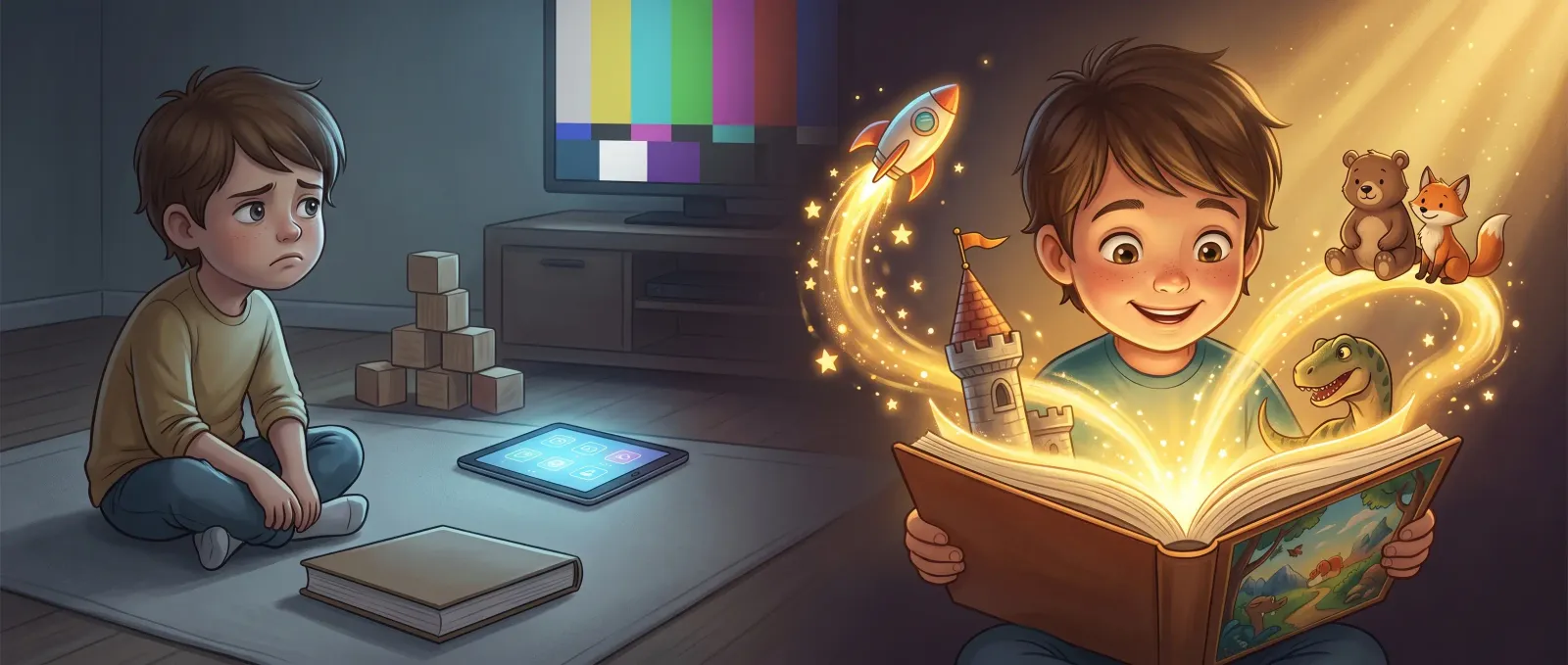
"Reading? Nah, I'm just not feeling it right now."
For a lot of parents, this scene will sound all too familiar. You go out and buy a stack of nice children's books, line them up neatly on the shelf, and make a real effort to sit down and read together on a regular basis. But the moment the book actually comes out, something else always seems to grab their attention first—toys, TV, a tablet, even tidying the room suddenly becomes appealing.
A child who doesn't enjoy reading, though, isn't necessarily a child who dislikes stories — the trouble usually lies somewhere else. Maybe the book just doesn't match what your child is actually interested in, maybe the text is too hard for them, or maybe reading has simply come to feel like an obligation rather than anything enjoyable.
Luckily, there's no shortage of ways to bring the fun back into reading.
1. Start by figuring out what actually interests your child
Some kids can't get enough of dinosaurs, while others are obsessed with animals, soccer, princesses, space, or wild, action-packed adventures.
A book shouldn't just be "a decent read for kids." What matters most is that it sparks your child's curiosity.
Ask yourself, for instance:
"If you had to pack a bag and leave on an adventure tomorrow, where would you head?"
"So, what's your favorite animal?"
"Is there something you've always wanted to try?"
"Who's the one friend you'd actually want by your side if things got hairy?"
These answers can reveal quite a bit about the kinds of books that are likely to appeal to you.
2. Let your child make their own choices
Kids usually get more out of reading when they feel like they have something to add to the conversation.
Let your child pick out a book on their own from time to time — even if it's not the story you'd have chosen for them.
A book about dinosaurs? Sure, why not.
Reading the same book for the fifth time? Nothing wrong with that either.
A story you don't even find that interesting yourself? Fair enough.
The key is making sure reading still feels enjoyable.
3. Don't make reading a contest
"You've still got ten more minutes of reading to do."
"You have to get through this chapter."
"You haven't done a lick of reading today."
Well-meaning as these remarks may be, they can turn reading into a chore in no time.
Try to focus on the story itself, not how many pages it takes up.
A solid fifteen minutes of eager listening or reading can do more good than thirty spent with your child's eyes glued to the clock.
4. Read together
Reading doesn't always mean your child curled up alone on the couch with a book.
Sharing a book together can turn the whole thing into something fun rather than a chore.
Read a section aloud, then let your child take the next turn. Stop to ask questions about the story. Share a laugh over a funny moment. Before you turn the page, ask your child what they think will happen next.
So a book turns into more than just something you read — it becomes something you share.
5. Make it personal
A story tends to grab a child's attention when they can see a bit of themselves in it.
Now picture that the protagonist isn't some stranger at all — it's your own child.
The main character shares your child's name and even looks just like them—setting off on a thrilling adventure full of important choices to make along the way.
That kind of format can change how you engage with a story entirely.
With a personalized children's book, your child can become the star of their own story—complete with their name and even their photo. Booklydoo goes a step further by letting you add several characters to one story, so siblings or friends can share the same adventure together.
6. Turn ordinary moments into stories
Fiction doesn't always have to mean imaginary worlds.
A story can also speak to something your child is going through right now.
Consider, for instance:
the first day of school;
· a new hobby;
a getaway
· an overnight stay with friends;
· a new pet
• a move;
· a brother or sister;
an exciting adventure.
When a child spots something from a story playing out in their own life, that story can suddenly mean so much more to them.
7. Turn bedtime into a quiet reading ritual
For many families, evening is when reading together fits naturally into the day.
Not so your child hits some magic page count, but because it can be a calm way to close out the day.
Set the phones and tablets aside for a while, cozy up together on the couch or in bed, and turn storytelling into a nightly habit.
A regular routine can help make reading a natural part of everyday life.
8. Experiment with different kinds of stories
Perhaps your child just hasn't found books that click with their interests yet.
Go ahead and experiment with different genres and subjects.
Consider, for instance:
Adventurethrilling finds and surprises along the way.
Animals— covering everything from pets to wild animals and even fantastical creatures.
Educational tales– about space, numbers, nature, or time, for instance.
Fantasy– dragons, magic, fairy tales, and other realms.
Everyday adventuresEveryday moments a child would immediately recognize.
There's no such thing as a book that suits every child.
9. Bring back the magic of reading
Maybe the biggest difference of all is this: reading doesn't have to feel like work.
Turn it into something worth savoring.
Grab a blanket and cuddle up together. Switch on a night light. Pick out a tasty snack. Then let your child choose the story.
Or make up a story together, with your child cast as the hero.
Personalized books can work especially well for kids who otherwise show little interest in reading. They strike a nice balance between the familiar and the new: your child sees themselves in the story, while still getting a brand-new adventure to dive into.
Reading doesn't have to be perfect from the start
If your child just isn't into reading right now, there's no need to force some big overnight transformation.
Start small.
A page or two. A short story. Reading side by side. Something your child is genuinely excited about.
And above all, let curiosity matter more than achievement.
Because in the end, learning to read isn't really the point. What you want is for a child to discover that stories can be a joy.
Maybe the issue was never reading itself, but finding the right story
Every child is different. One might vanish into a book about animals for hours on end, while another only lights up when the story involves a spaceship or some epic adventure.
And sometimes it just helps for a kid to actually see themselves in the story.
At Booklydoo, you can build a personalized children's book that puts your own kid front and center. Pick a theme, upload a photo, add a name, and the AI takes it from there, weaving together a story with illustrations to match. Before committing to a hardcover copy, you can flip through a digital preview and tweak things to your liking.
Maybe that's exactly the push needed to turn "I don't want to read" back into "Just one more story!"
The best book, after all, may simply be the one where you recognize yourself.