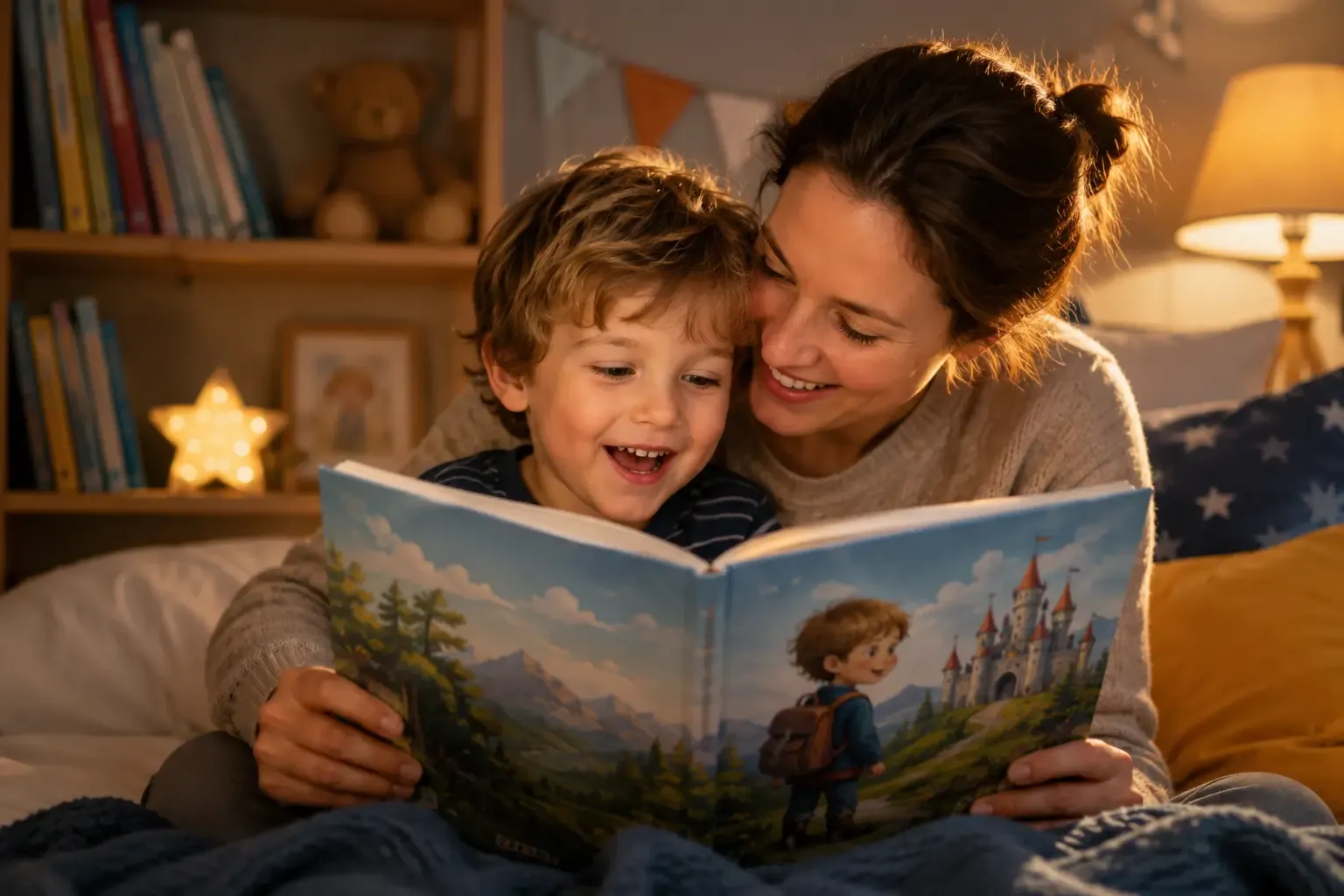
Why kids ask for the same story night after night
"Once more!"
Nearly every parent has heard this at one time or another.
Same book, fifth time this week. You could probably recite it from memory at this point. And yet here's your kid again, climbing onto your lap with that exact same book in hand.
Why do kids actually act that way?
For grown-ups, hearing the same story night after night can feel like a chore. Kids, though, are wired to experience it completely differently. That repetition isn't just tolerable to them—it actually feeds their development, helps language click into place, and gives them a comforting sense of security.
Ever wonder why kids beg for the same bedtime story night after night? In this article, we'll dig into what's really going on—and why it's actually something worth celebrating.
Kids thrive on routine
The world of a young child brims with new impressions.
Every day brings new words, new rules, new situations, new feelings to discover.
That's nice, but exhausting too.
Children need something stories can give them: a sense of predictability.
They know exactly:
- What lies ahead
- Which characters show up
- What's the joke that goes with it
- How it all wraps up
That's a load off your mind.
The brain builds knowledge through repeated exposure
When adults set out to learn something, they put in the practice.
Kids are no different.
Every time the tale gets retold:
- Repeated words
- Can sentences be recognized
- Do connections make more sense this way
This makes the information stick in memory more firmly.
Here are new details
Parents tend to assume the story never changes, yet kids come away from it with a completely different experience.
Each listen reveals something they hadn't noticed before.
They might catch a detail that slipped past them the first time around.
Or a character's motives suddenly click into place.
The story unfolds in step with their growth.
Repeated exposure builds vocabulary
Reading the same books aloud again and again does wonders for a child's language skills — it's one of the biggest benefits of the practice.
Kids pick up new words much more quickly after hearing or seeing them several times.
With a story they already know, kids don't have to work as hard to follow the plot.
This gives new words more room to sink in.
Recognition builds trust
Kids love feeling like they're good at something.
When kids already know a story, they can guess what comes next.
That gives you a sense of being in control.
Confidence comes from control.
You'll often catch this happening when kids can't wait to jump in with the next word as someone reads to them.
Stories give emotions a place to go and be worked through.
Children often make sense of their experiences by turning them into stories.
When a story taps into an emotion you recognize, revisiting that feeling again and again can be its own kind of pleasure.
For instance, when a character:
- Afraid is
- Sad is
- Giving something new a shot
- Pride is
Repeating things helps kids get a better handle on these feelings.
Why personal stories hit harder
When kids spot themselves in a story, they connect with it on a whole different level.
They're living an adventure, not just hearing about one.
They get to live out an adventure all their own.
That often makes repetition all the more tempting.
Plenty of parents find that personalized children's books get pulled off the shelf again and again, long after other titles have been forgotten.
What if you get sick of the same book yourself?
That's perfectly normal.
Here's a different way to experience the story:
- With distinct voices
- By asking the right questions
- By forecasting what comes next
- Looking through illustrations together
That way, grown-ups get to enjoy themselves too.
Why Booklydoo Stories Keep Winning Over Readers
When a child sees themselves as the main character, they form a much deeper emotional connection to the story.
That makes it far more likely the book will become a true favorite.
It's precisely that repetition, in turn, that helps build language skills and a love of reading.
Conclusion
Kids beg for that same bedtime story night after night, and it's not just stubbornness—there's a real reason behind it.
Repetition is how they learn, understand, grow, and feel safe.
So the next time you're reading that same book aloud for the twentieth time, know that there's a lot more going on than just storytelling.
You're helping your child make sense of the world.