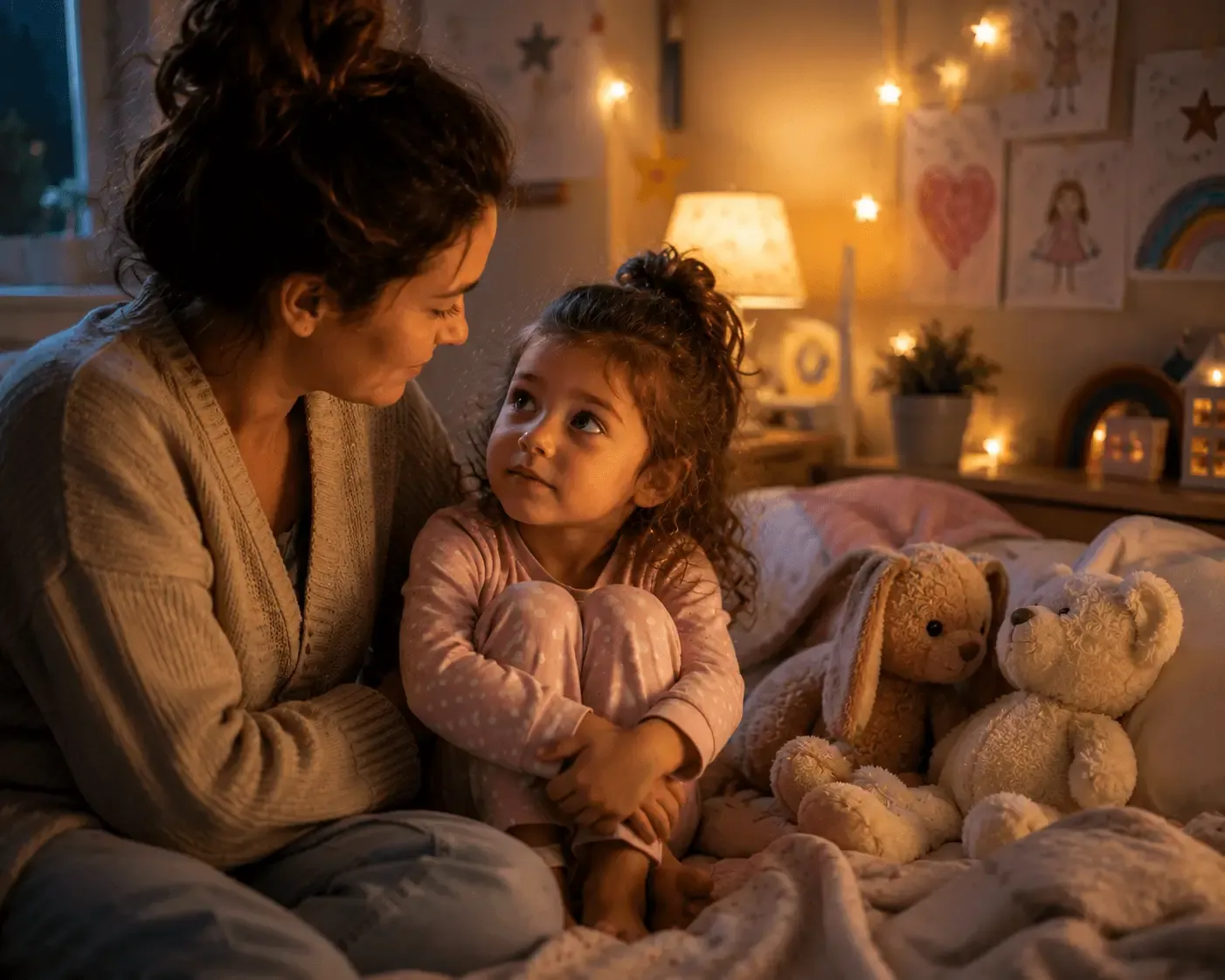
Children often feel far more than adults give them credit for.
Children are often underestimated by adults.
Because they're tiny.
They're just playing.
Because there's still so much they don't understand.
Kids, though, often notice far more than we give them credit for.
Sometimes even more than grown-ups bargain for.
Kids sense the mood in a room right away
You won't always need to spell things out for kids.
They often already sense it on their own:
- tension,
- sorrow
- stress,
- or joy.
Even when nobody says a word.
That's because kids pick up on things adults often miss, especially:
- show,
- facial expressions,
- body language
- and routines.
Why Stories Are Good Medicine for Our Emotions
Young children aren't always able to put their feelings into words.
Stories make it easier, though.
When a character:
- afraid is,
- sadness sets in,
- feels uncertain,
- faces down a hardship and comes out the other side,
Kids can usually spot that feeling in an instant.
Stories put into words the feelings children can't yet express on their own.
Fantasy takes the sting out of hard truths
That's precisely what makes fantasy stories so compelling.
A bear that talks and is scared of the dark somehow makes it easier to open up about fear than just talking about it head-on.
A lonely dragon shows children what it really feels like to be alone.
Stories create distance…
but at the same time, recognition too.
Why kids love picturing themselves as the hero
Kids aren't drawn only to thrilling tales.
They love feeling powerful.
When a child views themselves as:
- brave
- clever
- helpful,
- creative, or
confidence tends to build right along with it.
That's what makes personalized stories so special.
The child isn't looking at a hero at all.
The child is the hero.
The Power of Small Victories
Countless children's adventure stories, when you get down to it, all circle back to one and the same thing:
solve a problem.
That might be something big…
or something along those lines, quite modest in scope.
For kids, though, those wins feel like a huge deal.
A story goes like this:
- things happen right nearby, exciting and full of life
- that mistakes are part of the process,
- and that being brave doesn't mean fear never touches you.
Why bedtime tends to bring out big feelings
Lots of parents pick up on this:
In the moments right before drifting off to sleep, emotions have a way of rising to the surface.
Children turn into:
- more sensitive
- more affectionate
- chatterbox
That's simply because the day quiets down.
That's exactly what makes bedtime stories so worthwhile.
They give children the tools to:
- relax,
- process,
- and close safely.
Why Certain Books Stay With Us Forever
Some stories stay with you for years, long after everything else fades.
Not because the story was flawless.
Rather, it's about the feeling that surrounds it.
Kids remember:
- who read aloud,
- how it felt
- where they lay
- and how often they burst out laughing.
That's what turns stories into emotional memories.
Maybe kids pay more attention than we give them credit for
Grown-ups often speak to children.
But mostly, children just watch.
They feel.
Observe.
Remember this.
And maybe that's precisely what gives stories such power.
Because a story is more than the words that make it up.
They are emotions wearing a mask.