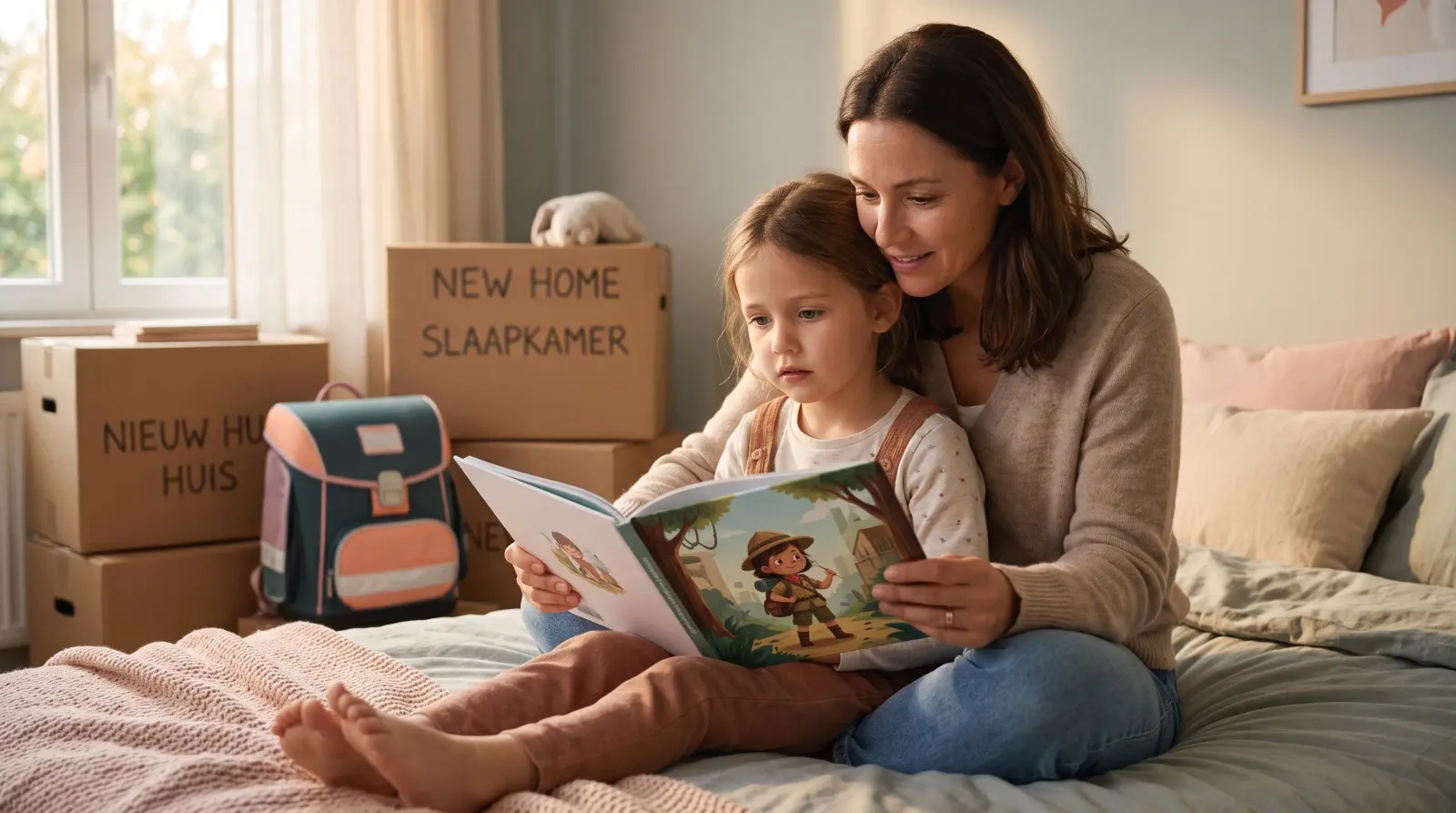
For grown-ups, change can be thrilling now and then. For kids, though, even the smallest shift can feel like a huge deal.
A new school.
A move.
Another bedroom.
A sibling.
A new pet arrives.
Starting daycare for the first time.
A moment that seems perfectly ordinary to you as a parent might carry real weight for your child.
Children thrive on routine and a sense of security. So when something in their world shifts, it can stir up all kinds of emotions — tension, excitement, sadness, uncertainty, even anger.
How can you help your child through that?
1. Take your child's feelings to heart
The most important step comes first: resist the urge to downplay a change just to make it sound less significant than it actually feels to your child.
"Scared? Why would I be?"
"It's not as bad as all that."
You'll see — it's going to be a blast.
"You're probably saying it to make your child feel better. But to the child, it can come across as though their feelings don't matter."
Try phrasing it this way instead:
"I get that this is exciting for you."
Or:
"It's a pretty major shift, actually."
You don't need to fix a feeling the moment it shows up.
It's often enough for a child to know that whatever they're feeling is okay to feel.
2. Talk it through beforehand so no one's caught off guard
A child usually finds change easier to handle once they know what's coming.
You're moving house? Then walk them through what's about to happen, calmly and clearly.
Is your child starting at a new school? Talk through together what that first day might look like.
Expecting a baby? Talk about how life's about to change.
You don't have to say it all in a single conversation.
Spacing small talks out over several days can actually make them more enjoyable.
3. Draw on examples people already recognize
Kids often grasp change more easily when it's tied to something familiar they can relate to.
At a new school, for instance, you might say:
You'll be starting at a new class soon. Just like at your old school, there'll be a teacher, other kids around, and a spot to keep your things.
This helps make the unfamiliar feel more familiar.
You can also stop by and check out the new place together.
Imagining something makes the unknown feel a little less scary to a child.
Let your child make some decisions on their own
When big changes come along, kids can end up feeling like they have no say in any of it—like it's all just happening to them.
Instead, try offering small choices.
When you move:
"Which stuffed animal do you want to bring to your new room?"
At a new school:
"Which bag do you want to bring?"
When you're putting together a new bedroom:
"Where do you want your books put?"
These small things add up, giving your child a sense of control.
And having that can make a real difference when everything else about the situation is out of his or her hands.
5. Keep as much of your normal routine intact as you can
Not everything has to change all at once.
During a major change especially, familiar routines can matter more than ever.
Say, for instance, keep up the habit of reading aloud together right before bed.
Try to eat and sleep at roughly the same times every day.
Make sure you still carve out time for the things you love doing.
A child can pick up on this, for instance:
"A great deal is shifting, though not everything is up for grabs."
That predictability can be reassuring.
6. Talk about change through storytelling
Kids take in a great deal of information through the stories they hear.
A story, then, can be a smart way to broach a coming change before it actually happens.
Getting your child ready for a new school?
Try reading a story together about a character starting at a new school for the first time.
Is this family relocating?
Or a story about moving house can help open up the conversation.
The nice thing about telling a story is that you don't have to come right out and mention your child directly.
You can begin with this question:
"What do you think excites this character?"
What follows sometimes comes naturally:
"Wouldn't you find that exciting too?"
7. Frame the change as part of a bigger, more positive story
A change doesn't have to be thrilling to count.
There's an upside to it as well.
At a new school, you could end up making new friends.
A bigger bedroom might be waiting on the other side of a move.
A new pet can turn into a lifelong companion.
A brother or sister can grow up to be a built-in playmate.
Try to appreciate both the thrilling and the fun sides of it together.
But keep your expectations in check.
You don't have to put on a brave face and act like everything's fine.
You can say both at once:
"There's an excitement to it, and good things can come from it too."
8. Give your child time to adjust
Children don't all handle change the same way.
A child's curiosity knows no bounds—a hundred questions and counting.
The other child barely says a word.
One kid jumps at the idea right away.
It takes weeks to get used to the other one.
That's to be expected.
It's unrealistic to expect your child to grasp or embrace a change right away.
Stay reachable.
Keep listening.
Give your child room to adjust in whatever way works for them.
Stories give us a low-stakes way to practice for real life.
A story can help children make sense of situations well before they actually go through them.
A character might, say, be starting school for the very first time.
To be afraid.
Meet up with a friend.
To err.
Go back home.
A story like this can get a child wondering what might happen next.
It can be as light and easygoing as you like.
An adventurous story can work the same magic.
A child starting at a new school, for instance, might be recast as a brave explorer venturing into uncharted territory.
The shift ends up carrying a different meaning altogether.
Make it personal
Kids often get an extra kick out of seeing themselves reflected in a story.
A personalized children's book can turn a tough conversation into something a child can actually relate to, making change much easier to navigate.
At Booklydoo, for instance, you can build a story starring your own child as the main character — just add a photo and name, and the character comes to life as them.
You can then build an adventure around the things your child already knows and loves.
A lively account of what happened on that first day of school.
A moving story of adventure.
A story where the protagonist's older sibling turns out to matter a great deal.
A fantasy adventure, plain and simple—one where your child learns that unfamiliar situations can turn out to be something special after all.
When kids see themselves reflected in the story, they naturally open up more—asking questions and sharing their feelings comes easier.
Ask questions before jumping in with answers
After the story wraps up, you can casually ask:
"What was it that got you excited?"
"What would you do?"
"Do you dare?"
"Who's coming with you?"
"What would help if you were scared?"
Don't rush to figure out every answer at once.
Listen closely, above all.
In the process, you may find that what's actually worrying your child is something that never even crossed your mind.
It's fine if a change doesn't feel easy from the start.
As a parent, it's only natural to want your child feeling better again as soon as possible.
It just takes some getting used to.
A child might feel nothing but excitement about starting at a new school.
The child might miss the old house.
A child might feel a pang of jealousy toward a new baby.
A child can feel thrilled and terrified all at once.
Feelings don't have to cancel each other out.
The point, then, isn't to wipe out every negative emotion.
The aim here is to help your child notice something on their own:
"You don't have to face this by yourself."
From a thrilling shake-up to a bold new chapter
Growing up means facing major changes along the way.
Some come as part of a plan, while others catch us off guard. Some are a pleasure, others a struggle.
As a parent, you can't shield your child from every change life throws at them.
You can walk your child through it, step by step.
By listening.
By making things predictable.
By giving them small choices along the way.
By talking things through together.
And stories offer a safe way to work through new situations.
Because sometimes a story is the easiest way to get a feel for something you haven't experienced yourself.
And who knows — maybe your child will find something meaningful in it:
A new chapter can be exciting, and it can just as easily turn into the start of a beautiful adventure.